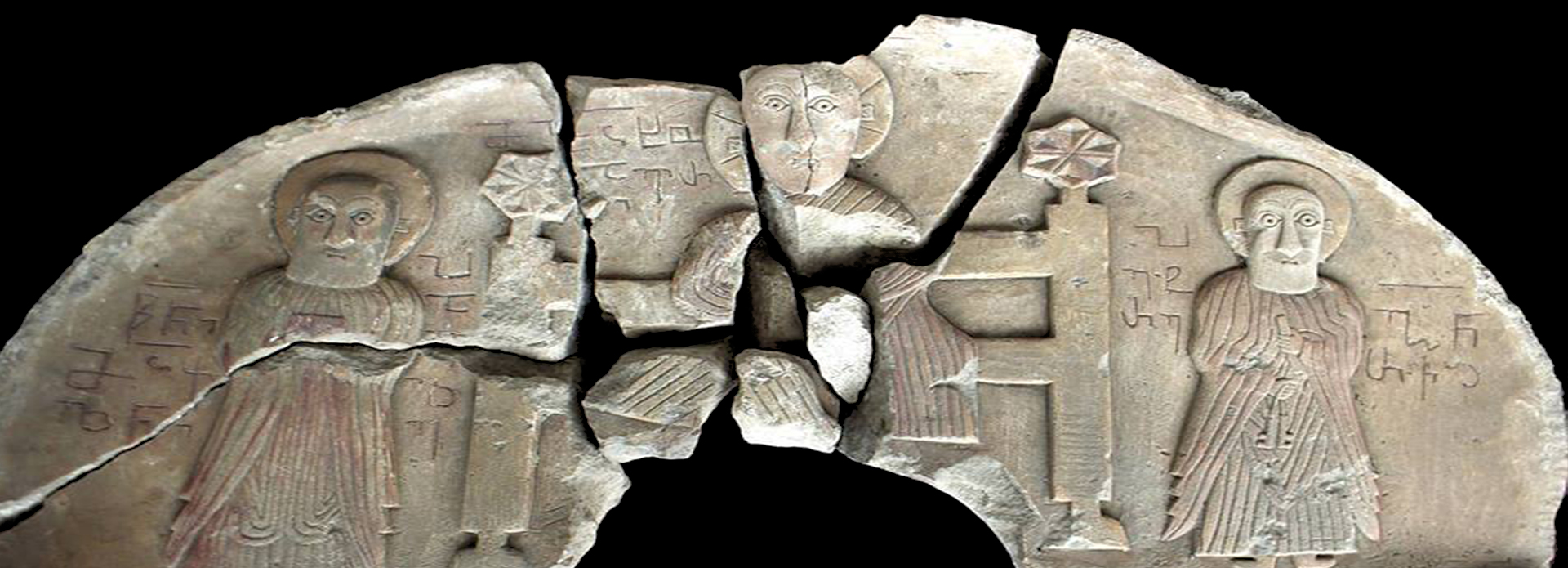
Kutaisi Historical Architectural Museum–Reserve


Gelati Monastery Complex, XII c

  
Bagrati Cathedral, turn of Xc

 
Motsameta Monastery Complex, VIII – XIX cc


Geguti Palace, XII – XIV cc


Location: Historical province of Imereti, City of Kutaiai and its surrounsings, 240 km. from Tbilisi
Area: 584 M2
Address: Kutaisi , 7, Nazarishvili str.
Open: 10:00 AM – 07:00 PM, six days per week; Day off – Monday
Means of access:
Shuttle bus / Minibus – Tbilisi-Kutaisi
Train – Tbilisi-Kutaisi;


Visitor will see: Monuments of Georgian architecture entered in the list of World Kultural Heritage List of UNESCO – Bagrati Cathedral,(XI c.), Gelati Monastery (XII c), Motsameta Monastery , remains of Geguti Royal Residence (XII c) and the XVI-century royal palace of the Kings of Imereti- “Okros Chardakhi (Golden Canopy)”

Kutaisi- capital of the West Georgian and consequently- the political centre of the united Georgian Kingdome from 978- 1122. Just near this city, in Tskhaltsitela River Gorge King David the Builder has built Gelati Monastery – referred by the contemporaries as “New Jerusalem and the Second Athens.”

The territory of Kutaisi-Geguti Museum-Reserve also incorporates all historical, architectural and archaeological monuments and sites located in Kutaisi and its surroundings and in the towns of Tskhaltubo and Tkibuli

Gelati

The most important centre of the medieval Georgia, the architectural ensemble of Gelati Monastery is located some 11 km. northwest of Kutaisi, in R. Tskhaltsitela gorge. It was founded in 1106 by the King David IV the Builder. The whole of the ensemble is encircled with masonry wall. The complex comprises several monuments built in different times (basically in XII-XIII cc). The site is entered the UNESCO List of World Cultural Heritage.

The monastery includes the temple, churches and other buildings that are as follows: the domed church of the Assumption of the Virgin with the interior entirely adorned with wall painting of different periods is the main building of the ensemble; XII-century St George church with wall painting performed in XVI c.; Two-storied St. Nickolas church; XIII c bell-tower and the building of Gelaty Academy.

The scientific- pedagogical and cultural-educational cradle of Georgia – Gelati Academy was founded in 1106 at Gelaty Monastery. Its establishment was initiated and greatly supported by the King David the Builder who summoned all celebrated and outstanding Georgian scholars from different parts of the countries and from abroad – Ioane Petritsi and Arsen Ikhaltoeli among them. The Academy became that famous that the contemporaries called it “The New Jerusalem and Other Athens.” The chief abbot-preceptor called modzgvart-modzgvari was the head of the establishment. The Academy Syllabus envisaged study of “Trivium ” and “Quadeium” - geometry, mathematics and music and of philosophy, rhetoric, grammar and astronomy. The fists two disciplines of the latter block comprised three types of Philosophy – practical, visual and verbal and there types of rhetoric – emphatic, arguing and solemn;

The world-famous mosaic of Gelati is preserved in the conch of the main temple, coupled with wall paintings of XII century preserved in western porch, reflecting scenes of the Ecclesiastic Council. Two XIII-century portraits of the King David Narini (junior) are performed in southern chapel. Other important frescoes, mostly pained in XVI century, represent historical persons - members of the royal family of Imeretian Kingdome coupled with the fresco of David the Builder. They are grouped on the northern wall.

Being the royal monastery and located close to the political centre of the State- its capital- the city of Kutaisi, Gelati has always been the important historical place with royal ossuary arranged there. All suzerains of the united Georgian Kingdom: David IV the Builder, Demetre I, George III and Queen Tamar (according to historical sources) are buried there as well as Kings Bagrat III, George II, George III, George VI, Alexander V and Silomon I of the late-time Kingdome of Imereti.

Bagrati

Bagrati cathedral that stands in Kutaisi on top of Ukimerioni Mountain was build on the turn of X-XI cc, in the reign of King Bagrat III of Georgia (975- 1014) .

Bagrati temple is the cross-shaped tri-conch domed construction. The dome, that is currently missing, rested upon four massive columns. Eastern, southern and northern arms of the cross were completed by externally rectangular and internally semi-circle apses. The second floor gallery was arranged in the interior of the western arm designed for the King, his court and retinue attending the service and/ or solemn occasions. The altar had separate rooms on both sides – a deaconry and a sanctuary. Immediate after the completion three-storied dwelling tower was attached to the temple. Slightly later, in the first half of XI century two richly adorned porches were adder to the main construction from south and west.

The whole of the temple is richly decorated. Facades are adorned by decorative arcades, connecting them to each other. Porches abound in decoration as well. Ornamentation of the temple’s body is more graphical, while the porches are adorned with deep cut plastic fretwork. Walls, vaults and floor surfaces were embellished with mosaic, some fragmented remains of which are till preserved on the floor. Traces of a fresco of the Virgin are noticeable in the southern porch interior.

In 1994 the together with Gelati Monastery, Bagrati temple was entered the World Cultural heritage List of UNESCO.

Motsameta

The Motsameta Monasrey (“Motsame” means “the martyr” in Georgian and that’s the word the mane of the church comes from) is located in the historical province of Imereti, close to Gelati complex, in Tsaltsitela River gorge. It has been built in the name of martyr brothers David and Konstantin Mkheidzes, the Eristavs of Argveti, who with their rather small garrison opposed the Arab ride, led by Murvan the Deaf and after long and fierce resistance were defeated by the outnumbering enemy and captivated. Only under the condition of abdication of Christian faith and confession of Islam the Arab commander would spare their lives but the proposal was firmly rejected. Despite merciless sufferings the brothers were not broken. Their tortured bodied were buried in Motsameta monastery. Later they were canonized by Georgian Church.


Send a H-card